Skip to content
Batteries and inverters, explained

Choosing a battery and inverter, and when to buy

The rebate, and why timing matters

Batteries and solar both earn the federal rebate as certificates, which the installer takes off the price. Both step down on fixed dates until the scheme ends in 2030, so the same system is worth less rebate each year it waits. These are the amounts for a home in south-east Queensland, worked out with the same rules our quotes use, at $38.50 a certificate.

Installed on or after Now1 Jan 20271 Jul 20271 Jan 20281 Jul 20281 Jan 20291 Jul 20291 Jan 20301 Jul 2030
Battery, usable
10 kWh$2,618$2,195$2,002$1,771$1,579$1,386$1,194$1,001$809
16 kWh$3,966$3,311$3,042$2,657$2,387$2,079$1,810$1,502$1,194
24 kWh$5,236$4,389$4,004$3,542$3,157$2,772$2,387$2,002$1,617
32 kWh$6,006$5,044$4,582$4,043$3,619$3,157$2,734$2,272$1,848
40 kWh$6,314$5,275$4,813$4,274$3,812$3,350$2,888$2,387$1,925
Solar panels
6.6 kW$1,733$1,386$1,386$1,040$1,040$693$693$347$347
10 kW$2,657$2,118$2,118$1,579$1,579$1,040$1,040$501$501
13.2 kW$3,504$2,772$2,772$2,079$2,079$1,386$1,386$693$693
  • Battery rebate is tiered by size. The first 14 kWh earn the full rate, the next 14 kWh 60% of it, and 28 to 50 kWh only 15%; nothing above 50 kWh. That is why a 40 kWh battery earns little more than a 32 kWh one.
  • Only usable capacity counts, the figure on the datasheet, not the larger number a battery is often sold as.
  • Waiting is rarely free. Prices do fall, but the rebate falls on known dates. Weigh any price drop you expect against the step in the table, and against a year of savings you would not have.
  • The certificate price moves. These figures use $38.50; the government clearing house pays $40 and the market usually trades a little under it.

Inverters we install

All of these are hybrid inverters: one box runs the panels and the battery, and a battery can be added later.

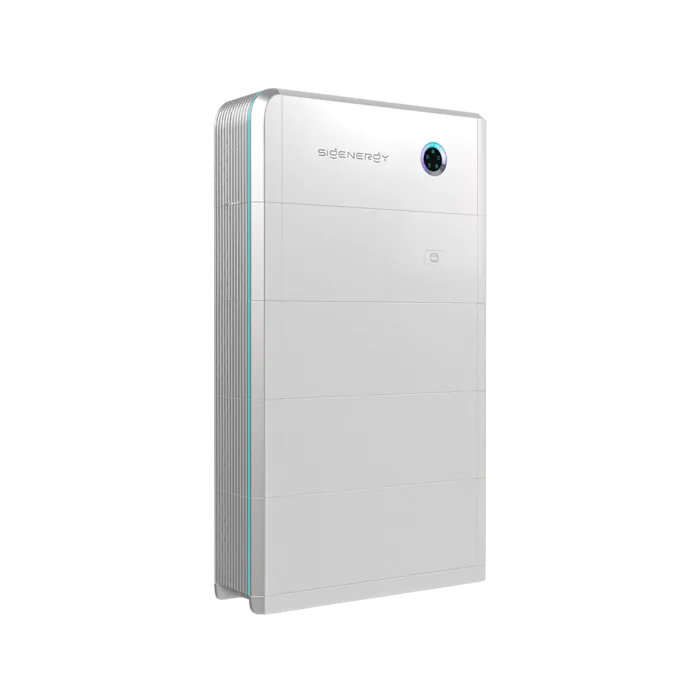
Sigenergy SigenStor EC, single phase
Sigenergy

SigenStor EC, single phase

  • Single phase
  • Hybrid

Sigenergy's energy controller runs the panels, the battery modules stacked beneath it and the backup as one system, and takes up to twice its own size in panels.

Sizes
  • 5 kW
  • 6 kW
  • 8 kW
  • 10 kW
  • 12 kW
Panels it takes
Up to 2 times its AC size
Battery
1 to 6 SigenStor BAT modules
Backup
Full rated power, 150% for 10 seconds; whole-house with the Sigen Energy Gateway
Efficiency
Up to 98%
Warranty
10 years
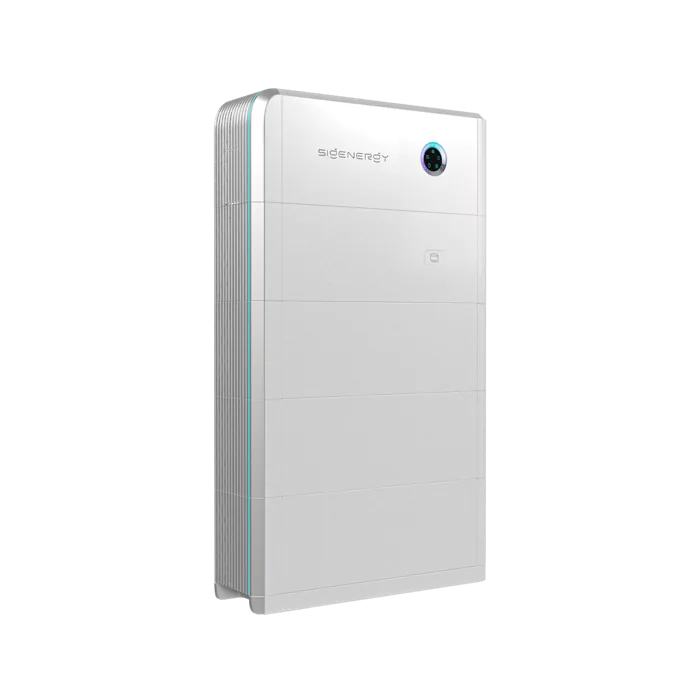
Sigenergy SigenStor EC, three phase
Sigenergy

SigenStor EC, three phase

  • Three phase
  • Hybrid

The three phase controller, from 5 to 30 kW. It can supply a different load on each phase, which suits a house whose big appliances are not spread evenly.

Sizes
  • 5 kW
  • 6 kW
  • 8 kW
  • 10 kW
  • 12 kW
  • 15 kW
  • 17 kW
  • 20 kW
  • 25 kW
  • 30 kW
Panels it takes
Up to 1.6 times its AC size
Battery
1 to 6 SigenStor BAT modules
Backup
Whole-house with the Sigen Energy Gateway
Efficiency
Up to 98.4%
Warranty
10 years

Inverter size and phase

  1. Start with your supply: single or three phase

    Most older homes have a single phase supply, many newer and larger ones three phase. Three phase lets a bigger system connect and spreads it across the phases. A single phase inverter on a three phase home works, but limits how big the system can be. We check your switchboard and meter before recommending either.

  2. The network sets the ceiling

    Energex decides how much inverter can be connected and how much can be sent back to the grid, and the limits are lower on single phase. A system within the standard limits is approved quickly; a bigger one needs a separate application. We lodge it and size around the answer.

  3. More panels than inverter is normal

    Panels rarely make their full rating, so an inverter is usually paired with more panel capacity than its own size, up to the maximum PV input on its datasheet. A 10 kW inverter with around 13 kW of panels is common, and makes more energy across the day than a perfect one-to-one match.

  4. On a hybrid, size also means battery power

    The inverter's kW is also how fast the battery can charge and how much it can run at once. A small inverter with a big battery can take a long time to empty it in the evening, and limits what runs in a blackout.

  5. Backup in a blackout

    A battery does not keep the lights on in a blackout by itself; the inverter has to be wired for it. Some systems back up the whole house, others a set of essential circuits. Tell us which loads matter (fridge, lights, internet, a medical device) and we will design for them.

Batteries we install

Both are modular: a battery is built from stacked modules, so the size is chosen in steps and more can be added later within the stack's limits.

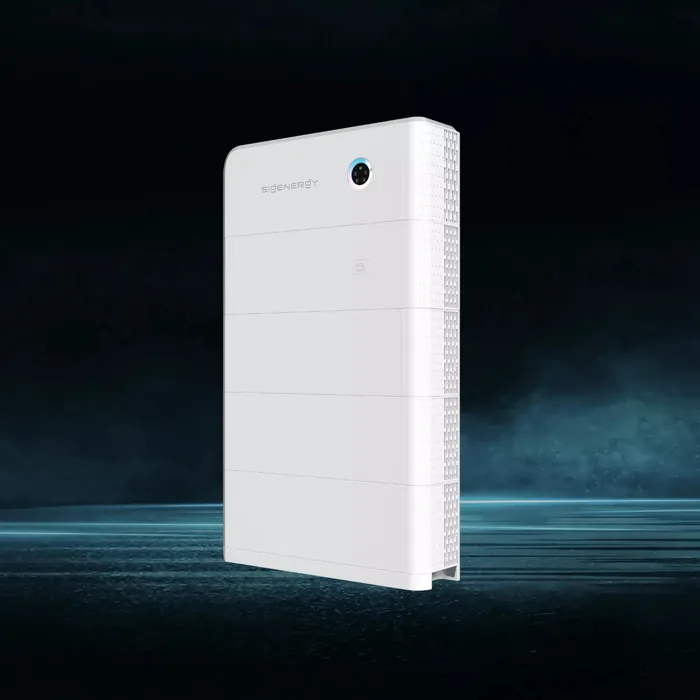
Sigenergy SigenStor battery modules
Sigenergy

SigenStor battery modules

  • Lithium iron phosphate (LFP)

Modules stack under the Sigen controller, 1 to 6 of them, and new modules can be mixed with older ones, so a battery can be started small and added to.

SigenStor BAT 5.0 5.2 kWh usable of 5.38 kWh, 2.5 kW
SigenStor BAT 6.0 5.84 kWh usable
SigenStor BAT 8.0 7.8 kWh usable of 8.06 kWh, 4 kW
SigenStor BAT 10.0 8.76 kWh usable of 9.04 kWh
Warranty
10 years: at least 70% of usable capacity, or a set amount of energy through it, whichever comes first
Online
Must stay connected: offline for over a year cuts the warranty to 5 years
Weatherproofing
IP66, works from -20 to 55 °C
Usable
Discharges to 100% of its usable capacity

Choosing a battery size

  1. Size it to your evening and night

    A battery earns its keep on the power you would otherwise buy after the sun goes down. Your bill or meter data shows how much that is. A battery much bigger than your evening and overnight use sits partly full, and one much smaller runs out before morning.

  2. Your plan changes the answer

    On a plan with a free or very cheap window, a battery can fill from the grid in that window and carry the house through the expensive hours, which can justify a bigger one. Some plans also pay well for power sold back in the evening peak. The plan and the battery are best chosen together; our power bill calculator compares them on your own usage.

  3. kWh is how much, kW is how fast

    Capacity (kWh) is how much energy it holds; power (kW) is how much it can deliver at once. Running the oven, air-conditioning and a car charger together needs power as much as capacity.

  4. Mind the rebate tiers

    The rebate is generous up to 14 kWh usable, smaller to 28 kWh and small beyond. A bigger battery can still pay off, but more of it has to be paid for by its own savings.

  5. Virtual power plants

    A virtual power plant lets a retailer use part of your battery at times of high demand in exchange for credits or a better rate. Every battery on the rebate has to be able to join one; whether to join is your choice, and worth weighing against the capacity it reserves.

  6. Where it goes

    Batteries have an operating temperature range and need ventilation and clearances. A shaded wall or a garage is usually best; full afternoon sun is not.

How long they last, and after the warranty

  1. Panels: the longest-lived part

    Panels carry performance warranties of 25 to 30 years and usually keep working well past them, just making a little less each year. After the warranty nothing switches off; the system simply keeps producing at its aged output.

  2. Batteries: they fade, they do not stop

    Both batteries here promise at least 70% of their capacity after 10 years, or after a set amount of energy has been through them, whichever comes first. A battery that is cycled hard every day can reach that energy limit before the 10 years. After the warranty it keeps working, with a little less capacity each year. Our proposals assume 80% left at year 10, then a slow further fade, so the savings they show fall with it. Keep it online: Sigenergy's warranty drops to 5 years if the battery is offline for more than a year.

  3. Inverters: plan for one replacement

    The inverter works hardest and is the part most likely to need replacing in the life of the panels. Budget for one replacement in 25 years. With a modular system the battery modules and panels stay; only the failed part is changed.

  4. What makes a warranty worth having

    A local office that handles claims, a clear process, and monitoring that shows a fault before it costs you. We monitor every system we install, which is how most problems are found and claimed while still under warranty.

Want the numbers for your house?

We size the system to your usage and your plan, and show the rebate and savings before you decide. See also the panels we install.

Get optimised