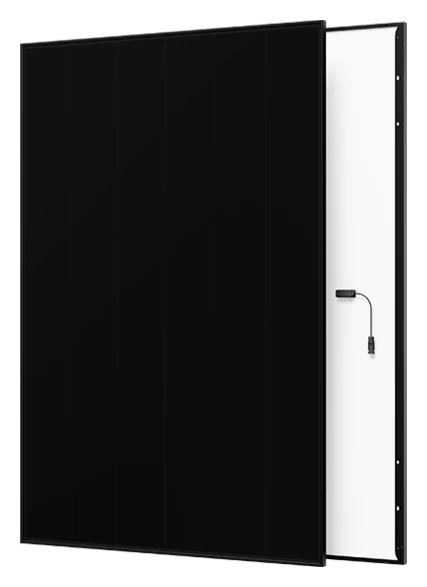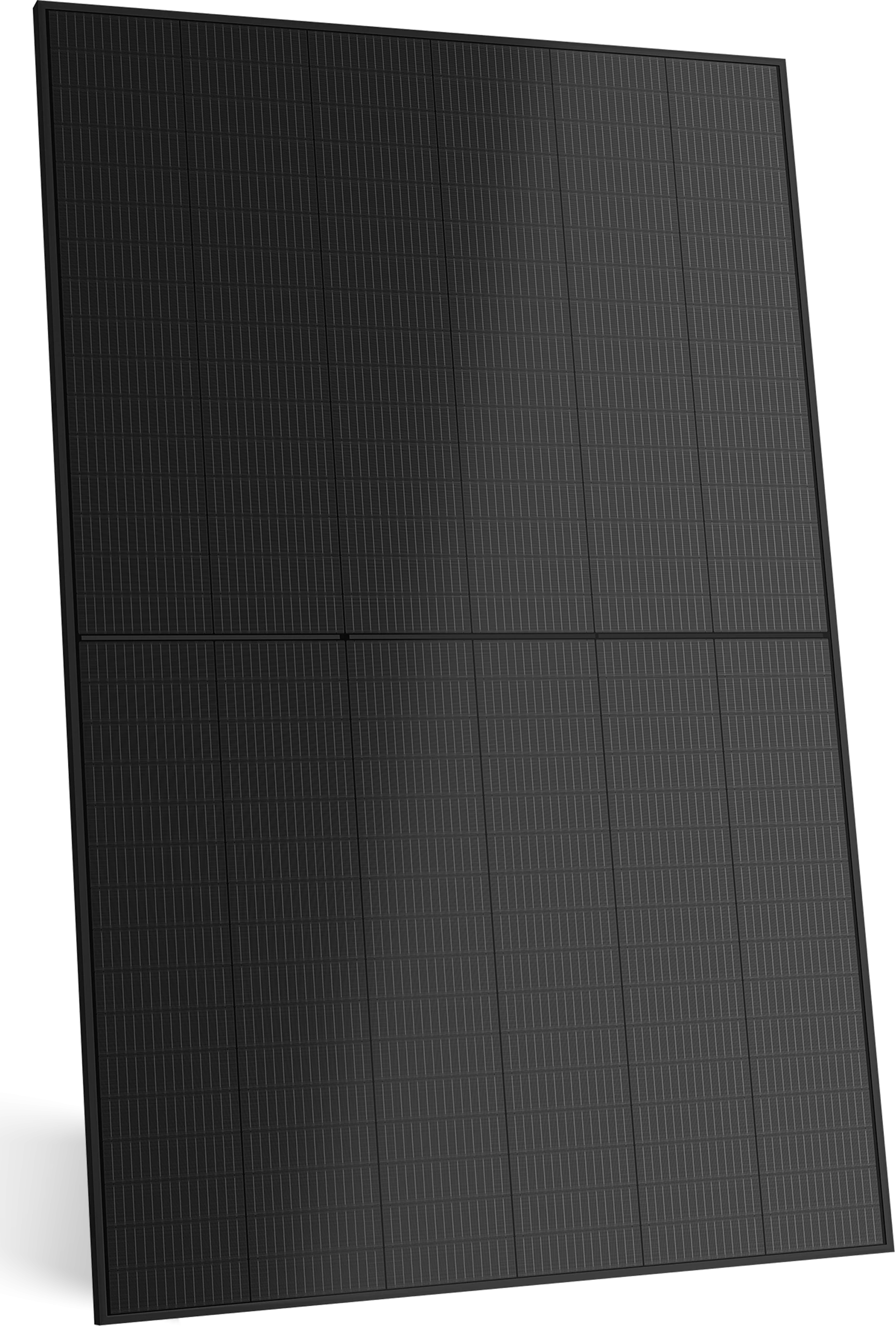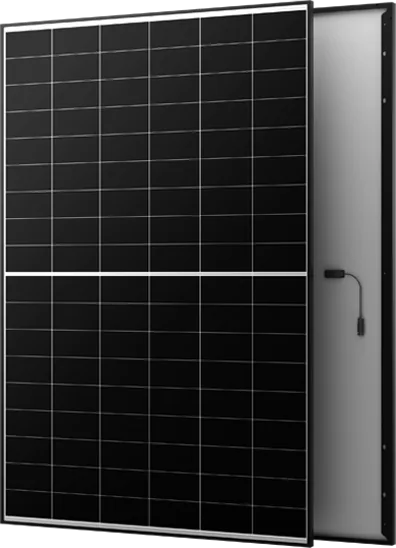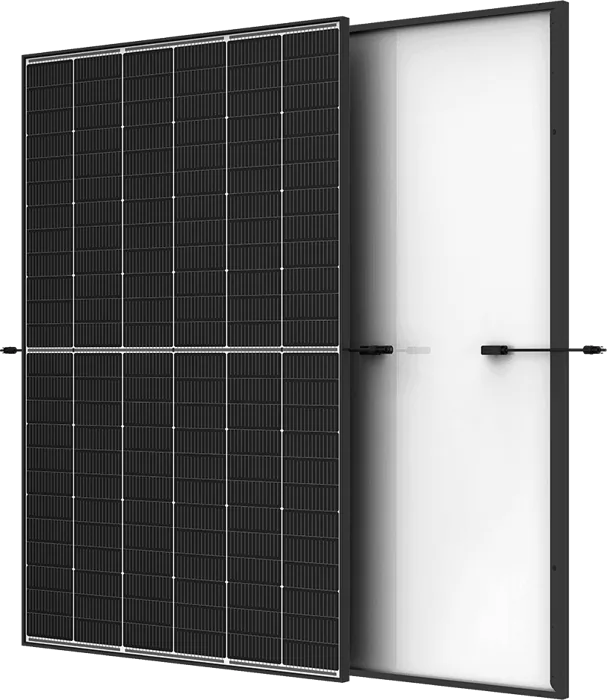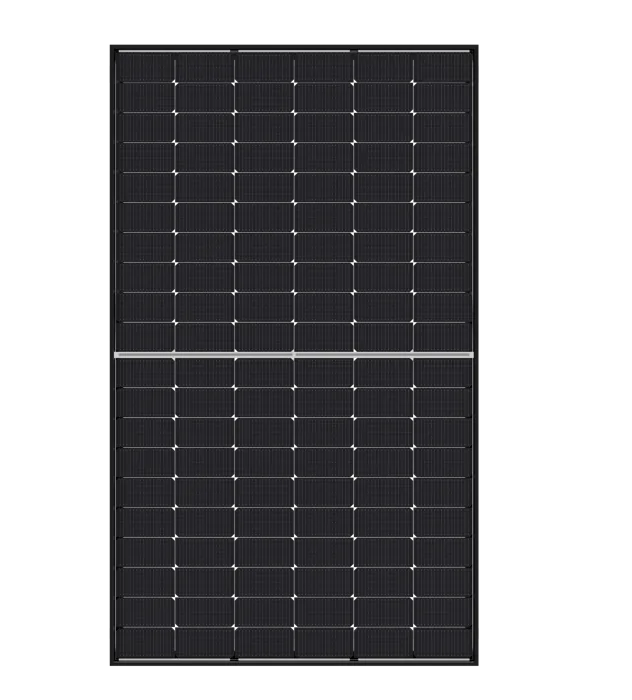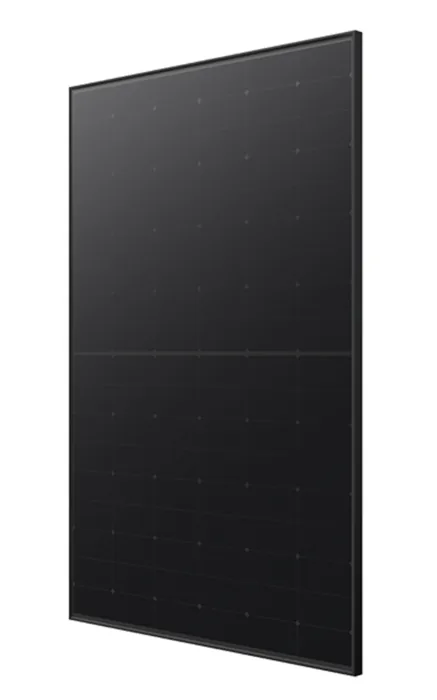
WST-585NGX72 585W
- 585 W
- 22.6% efficient
- Size
- 2278 × 1134 mm, 27 kg
- Product warranty
- not stated
- Performance warranty
- not stated
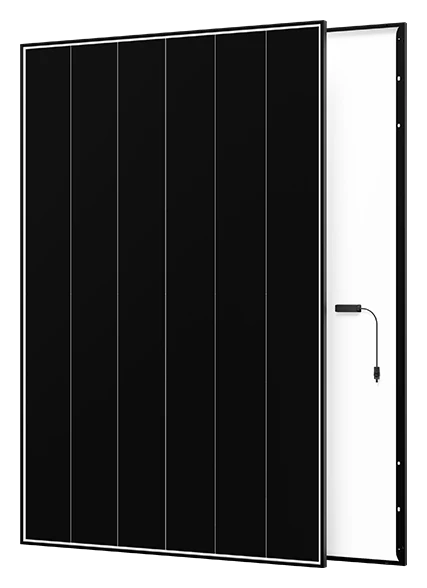
All the wiring is behind the cells, so the whole front catches light: 495 W from a standard-size panel, with a black frame and a white back. Loses little in the heat and is built to keep producing when part of it is shaded.
The all-black version of AIKO's back-contact panel: black frame, black back, no visible wiring on the front, so the roof looks like one dark surface. The same 495 W and shade tolerance.
Jinko's newest rooftop panel, built from 48 larger cells, all black with glass on both sides. Plenty of output from a standard-size panel at a sensible price.
All the wiring is behind the cells, so the whole front catches light and the panel looks completely black. Low heat loss, slow ageing, and built to lose less when part of it is shaded.
A glass-on-both-sides panel with a black frame and a strong load rating, covered by Trina's Australian warranty with a 30-year output promise.
The earlier Tiger Neo, the same size as the 475 W with fewer watts from it. The same 30-year output promise, and a sensible choice where the roof has room to spare.
LONGi's back-contact panel and the shortest of the six. Its product warranty is shorter than the others at 15 years, and LONGi now lists a newer version in Australia, so we check stock before quoting it.
The lowest heat loss and the slowest yearly ageing of the six, with 92% of its output promised at 25 years. Lead-free, and made in Singapore.
The same figures in one table. "On a hot roof" is each panel's rated output less its own heat loss at a 65 °C cell temperature, which a dark panel on a Queensland roof reaches on a summer afternoon.
| Panel | Watts | Efficiency | Hot roof | Cells | Product warranty | Performance warranty | Size, weight |
|---|---|---|---|---|---|---|---|
| Winaico WST-585NGX72 585W | 585 W | 22.6% | not stated | not stated | 2278 × 1134 mm, 27 kg | ||
| Aiko Neostar 3S60 545W ABC | 545 W | 24.5% | not stated | not stated | 1960 × 1134 mm, 23.5 kg | ||
| Winaico WST-530NGX 530W | 530 W | 23.8% | not stated | not stated | 1961 × 1134 mm, 24 kg | ||
| Winaico WST-525NGX 525W | 525 W | 23.6% | not stated | not stated | 1961 × 1134 mm, 24 kg | ||
| Winaico WST-515NHX54 515W | 515 W | 26.4% | not stated | not stated | 1722 × 1134 mm, 21 kg | ||
| Jinko Tiger Neo III 510W | 510 W | 23.6% | not stated | not stated | 1906 × 1134 mm, 23 kg | ||
| Trina Vertex S+ G3 505W | 505 W | 25.3% | not stated | not stated | 1762 × 1134 mm, 21 kg | ||
| Aiko Neostar 3P54 500W ABC | 500 W | 25.1% | not stated | not stated | 1757 × 1134 mm, 20.6 kg | ||
| Aiko Neostar 3P54 495W | 495 W | 24.8% | 444 W | N-type back contact (ABC) | 25 years | 30 years, 88.85% | 1762 × 1134 mm, 20.6 kg |
| Aiko Neostar 3S54 495W All Black | 495 W | 24.8% | 444 W | N-type back contact (ABC) | 25 years | 30 years, 88.85% | 1762 × 1134 mm, 20.6 kg |
| Aiko Neostar 3P54 490W | 490 W | 24.6% | not stated | not stated | 1757 × 1134 mm, 20.6 kg | ||
| Aiko Neostar 3S54 490W | 490 W | 24.6% | not stated | not stated | 1757 × 1134 mm, 20.6 kg | ||
| Aiko Neostar 3S54 485W | 485 W | 24.3% | not stated | not stated | 1757 × 1134 mm, 20.6 kg | ||
| Winaico WST-485BDX54 485W | 485 W | 23.8% | 435 W | not stated | not stated | 1800 × 1134 mm, 25 kg | |
| Aiko Neostar 2P 475W ABC | 475 W | 23.8% | not stated | not stated | 1757 × 1134 mm, 20.6 kg | ||
| Jinko Tiger Neo III 475W All Black | 475 W | 23.77% | 426 W | N-type TOPCon | 25 years | 30 years, 88.85% | 1762 × 1134 mm, 21.7 kg |
| REC Alpha Pure RX 475W | 475 W | 24.6% | not stated | not stated | 1730 × 1118 mm, 21.5 kg | ||
| Tindo Walara 475W G4P | 475 W | 21.4% | not stated | not stated | 1961 × 1134 mm, 24 kg | ||
| TCL N-type 470W | 470 W | 18.2% | not stated | not stated | 2278 × 1134 mm, 27 kg | ||
| Aiko Neostar 465W | 465 W | 23.3% | 417 W | N-type back contact | 25 years | 30 years, 88.85% | 1757 × 1134 mm, 20.6 kg |
| Winaico WST-465NCX48 465W Bifacial | 465 W | 23.8% | not stated | not stated | 1722 × 1134 mm, 21 kg | ||
| Trina Vertex S+ 450W | 450 W | 22.5% | 398 W | N-type TOPCon | 25 years | 30 years, 87.4% | 1762 × 1134 mm, 21 kg |
| Jinko Tiger Neo 440W | 440 W | 22% | 389 W | N-type | 25 years | 30 years, 87.4% | 1762 × 1134 mm, 22 kg |
| Tindo Walara 440W G4P | 440 W | 22.5% | not stated | not stated | 1722 × 1134 mm, 21 kg | ||
| LONGi Hi-MO X6 430W | 430 W | 22% | 380 W | Back contact (HPBC) | 15 years | 25 years, 88.9% | 1722 × 1134 mm, 20.8 kg |
| REC Alpha Pure-R 430W | 430 W | 22.3% | 389 W | Heterojunction (HJT) | 20 years | 25 years, 92% | 1730 × 1118 mm, 21.5 kg |
Every panel above is a good one. The differences between them are real but smaller than the brochures suggest, so here is what is worth weighing, roughly in order.
There are two warranties. The product warranty covers the panel itself failing: a broken junction box, delamination, a cracked frame. The performance warranty promises how much output is left after so many years. A long warranty is only worth something if the company is still here to honour it, so check it has an Australian office that handles claims, not just a distributor.
Every panel loses a little output each year: a larger drop in the first year, then a small steady one. The difference between 0.25% and 0.4% a year (the range on this page) sounds like nothing, but across 25 years it adds up to about 3.6% of the system's output by the end. The performance warranty is where this is promised in writing.
Panels are rated at 25 °C, and a roof in summer is far hotter than that. The temperature coefficient on the datasheet says how much output is lost for each degree above 25 °C. Small as it looks, it matters most in exactly the hours you want the most power. The "On a hot roof" figure works it out for you.
A more efficient panel makes more watts from the same area. That matters when the roof is small, oddly shaped or partly shaded and you want the most from the space you have. On a big, open roof, a slightly less efficient panel at a lower price can make the same energy for less money.
Newer cell designs (TOPCon, heterojunction and back contact) lose less output as they age than the panels that were standard a few years ago, which is part of why the performance warranties here run 25 to 30 years. Back-contact designs move the wiring behind the cell, which leaves more of the front catching light and gives an even, all-black look. Heterojunction cells lose the least to heat.
Panels around 1.7 to 1.8 m long and 20 to 22 kg are the standard size for houses. A few millimetres can decide whether another row fits, which is why we lay each roof out with the exact panel before quoting.
The federal solar rebate (STCs) only applies to panels on the approved product list, installed by an accredited installer. Every panel we install is on that list.
"Tier 1" is a list of manufacturers banks are willing to lend to, not a measure of panel quality. And the wattage on its own says little: a 475 W panel is a bigger or more efficient panel, not a better one, and what counts is the system's total output on your roof.
We lay out your roof with each panel and show what it would make, before you decide.